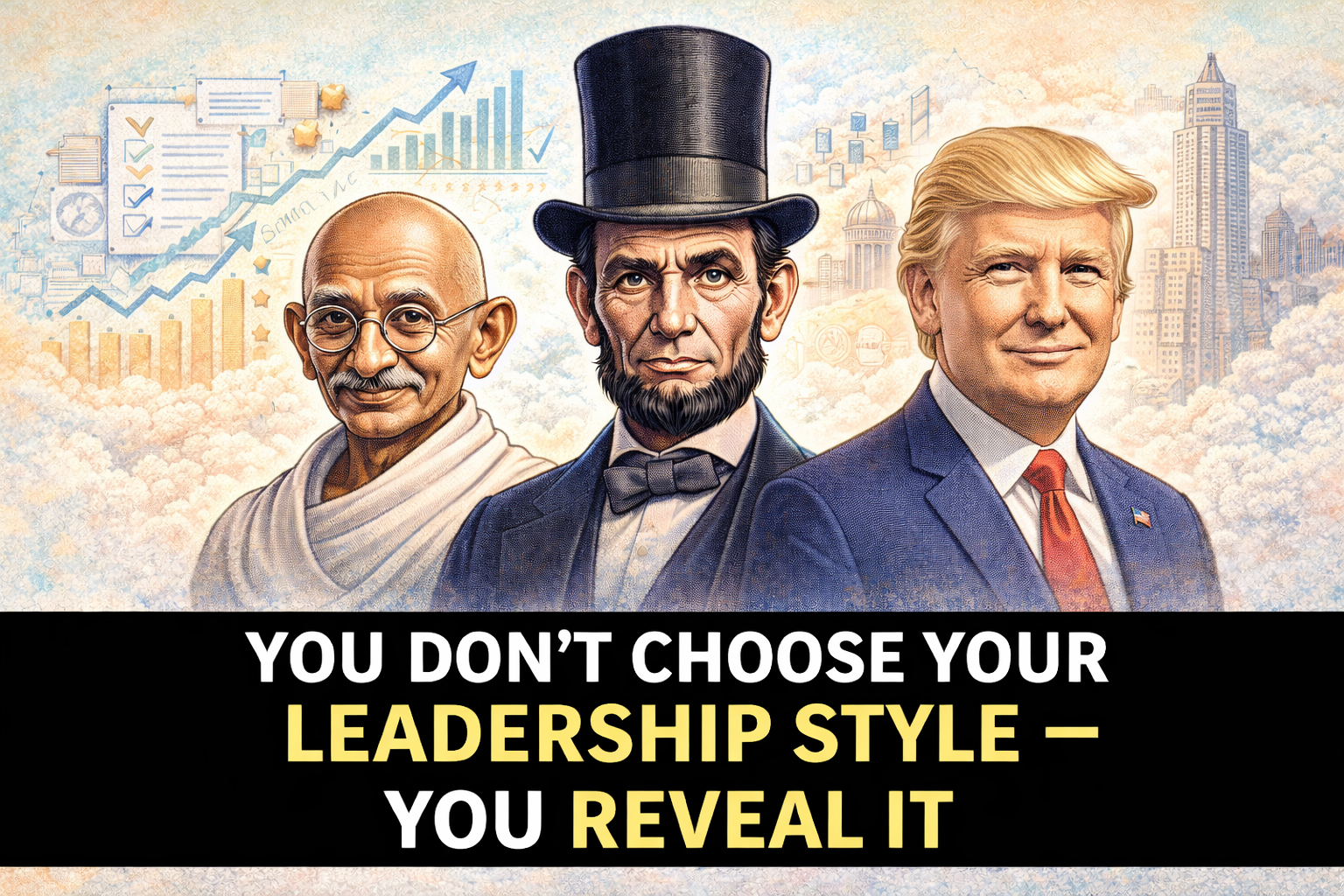

Most professionals believe leadership style is something they develop over time -- by copying mentors, attending workshops, or gaining authority. But leadership style is not adopted. It is revealed.
It is the visible expression of an invisible architecture - your values determine what you prioritize, your mindset shapes how you interpret risk and failure, your personality influences how you communicate and energize others, and your behaviours signal what you truly reward.
When this architecture remains unmapped, leadership becomes inconsistent. When it is understood, leadership becomes aligned. And alignment is what makes influence sustainable.
Leadership Is an Outcome, Not a Technique
We often categorize leaders as transformational, authoritative, democratic, visionary, or transactional. These labels are useful - but they describe surface behavior.
They do not explain origin.
Leadership style is not a template you pick. It is an emergent property of deeper internal drivers:
- If your core value is fairness, you will naturally lean toward participative decisions.
- If your value is speed and winning, you may favor decisive, top-down calls.
- If your mindset views failure as learning, you will create psychological safety.
- If your mindset equates failure with weakness, you may unconsciously penalize experimentation.
Your leadership style is already forming - whether you are aware of it or not.
The Risk of Unconscious Leadership
The danger is not having a style. The danger is not knowing your style. Unmapped leadership leads to:
Inconsistency: You communicate empowerment but reward compliance.
Overplayed Strengths: Your decisiveness becomes rigidity. Your empathy becomes avoidance.
Blind Spots: You misinterpret team resistance as incompetence -- when it may be a response to your own patterns.
Cultural Drift: Teams mirror what leaders repeatedly tolerate or celebrate.
Most leadership breakdowns are not failures of intelligence or intent. They are failures of self-awareness.
The Four-Layer Architecture of Leadership
If leadership style is visible behavior, what sits beneath it? Think in four layers:
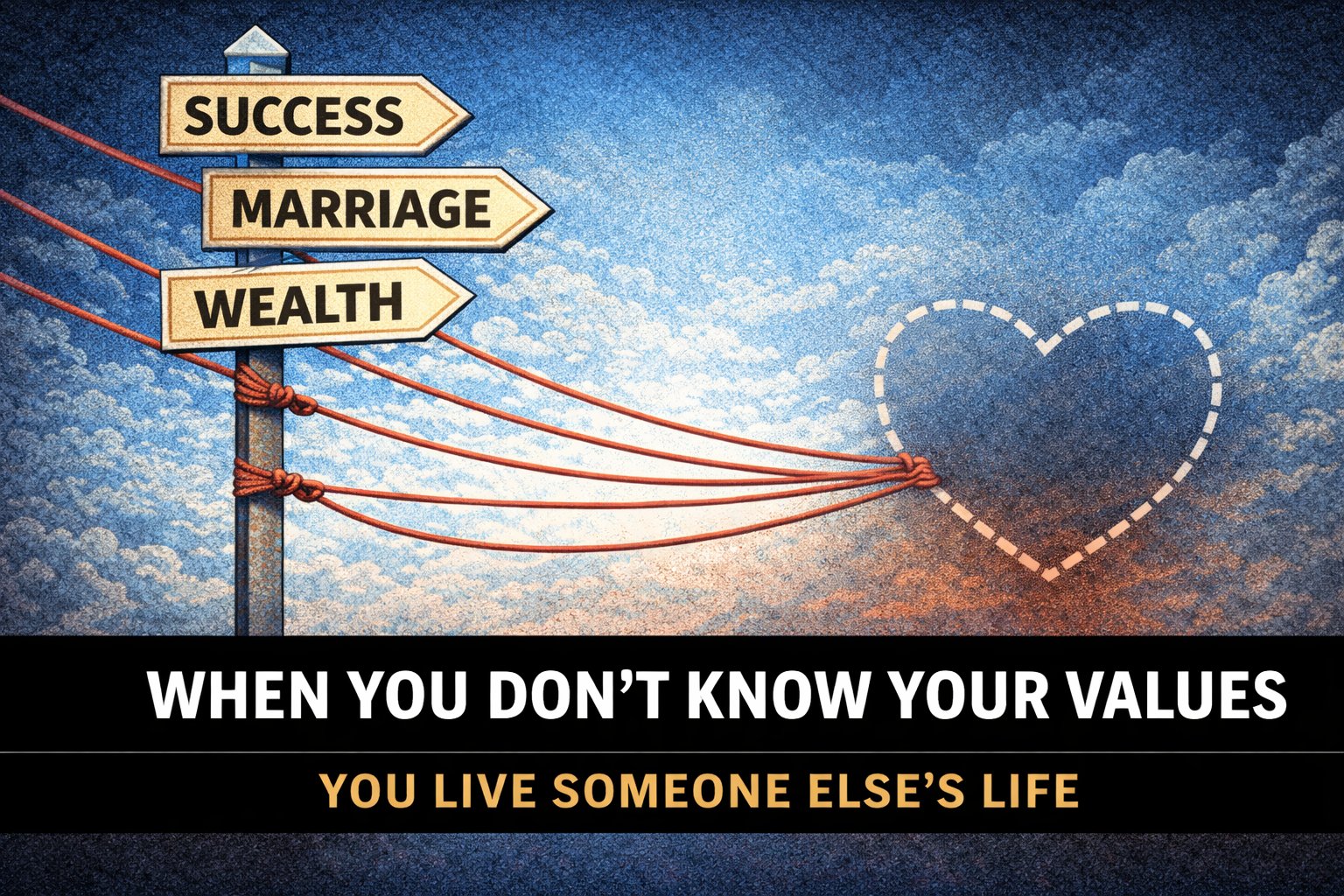
1. Values : What do you fundamentally prioritize -- growth, stability, autonomy, recognition, fairness, speed, harmony? Values determine your decision bias.
2. Mindset: Do you see constraints or possibilities? Threat or opportunity? Scarcity or abundance?Mindset determines your strategic posture.
3. Personality: Are you naturally assertive or reflective? Structured or flexible? Analytical or intuitive?Personality determines your communication rhythm and energy.
4. Behaviours: What do you repeatedly do under pressure? Interrupt? Delegate? Micromanage? Encourage? Withdraw? Behaviours determine team experience.
Leadership style is the integrated output of these layers. You cannot sustainably change the surface without understanding the foundation.
Why Mapping Matters for Career Progress
As professionals rise in responsibility, technical competence matters less. Leadership clarity matters more.At senior levels:
- Misalignment creates culture instability.
- Unchecked blind spots amplify across larger teams.
- Values inconsistencies erode trust faster.
Understanding your leadership architecture allows you to:
- Double down on authentic strengths.
- Mitigate predictable overextensions.
- Hire complementary personalities.
- Design teams aligned with your natural style.
Self-mapping is not introspection for its own sake. It is strategic calibration.
The Myth of Copying Great Leaders
Many emerging leaders attempt imitation. They adopt the communication style of admired CEOs. They mimic decisiveness or charisma. They attempt to assert authority. But borrowed leadership styles create friction because they conflict with internal architecture. Influence feels forced.
Credibility weakens when behaviour does not align with values and personality. Sustainable leadership is not performance. It is coherence.
Leadership as Alignment
Leadership development is often framed as skill acquisition. But the deeper work is alignment:
- Are your decisions consistent with your values?
- Does your mindset support the culture you want to build?
- Are your behaviors reinforcing what you claim to believe?
When alignment increases, leadership becomes predictable - in the best way.Teams feel psychological safety. Direction becomes clearer. Trust compounds.
The Strategic Imperative
Leadership is not random. It is patterned. If you do not consciously map your internal architecture, it will still operate - but unconsciously.
And unconscious patterns, when scaled, create unintended cultures.
Progress does not begin with adopting a new leadership style. It begins with understanding the one you already embody. Because leadership is not what you say in a meeting, it is what your architecture repeatedly produces.
---------------------------------------------------------------------
You've read the ideas. Now test your clarity.
Take the DeepClarity Assessment and discover how structured your thinking really is.